
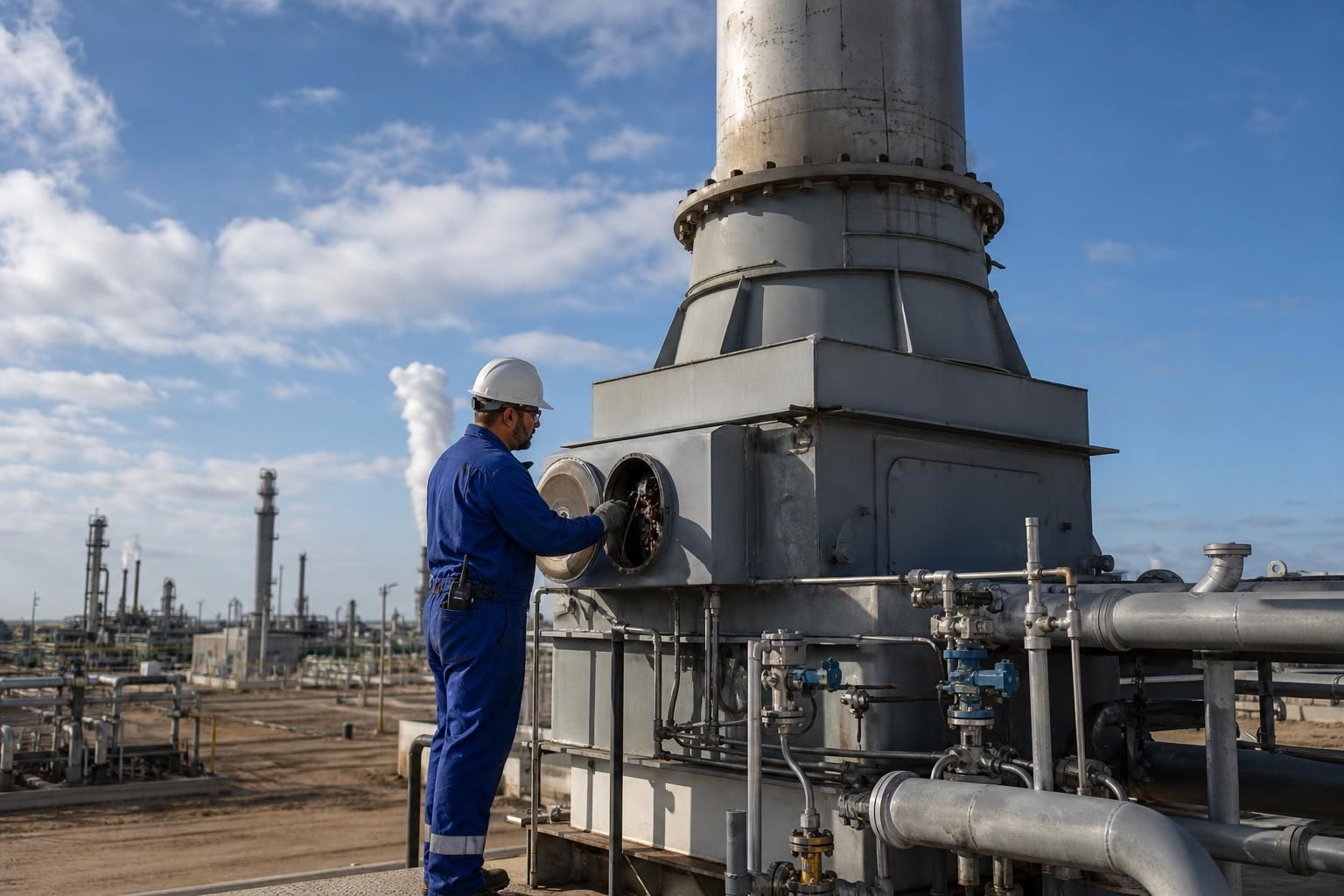
A thermal oxidizer only protects a site while its flame is stable. When the burner misbehaves or the flame signal drops out, the unit trips, process gas has nowhere to go, and operations teams scramble. Many of these events are traceable to two components that rarely get much attention until something goes wrong: the burner and the flame detection that watches it. For plant managers and engineers planning maintenance in 2026, a closer look at both is time well spent.
Why the burner deserves routine attention
The thermal oxidizer burner has a demanding job. It must light reliably, hold a stable flame across a range of fuel and waste-gas conditions, and keep the chamber at the temperature needed for destruction of the gases it treats. Over time, burner parts see heat, thermal cycling, and sometimes contaminants in the gas stream. Ignition components wear, fuel passages can foul, and refractory around the burner can degrade. None of this happens overnight, but small changes add up, and the first visible symptom is often an unexpected trip.
Signs the burner is asking for help
- Longer or less consistent light-off times.
- Flame shape that looks lazy, lifting, or uneven during inspection.
- Repeated low-flame or flame-failure alarms with no obvious process cause.
- Rising fuel use to hold the same chamber temperature.
- Visible damage or buildup around the burner throat or nearby refractory.
Any one of these can have several causes, so trending them matters more than reacting to a single event. A simple log of alarms, light-off attempts and fuel use can reveal a pattern that a single shift would never notice.
What the flame scanner actually does
Flame detection is a safety function. The scanner confirms that a flame is present, and the burner management system acts on that signal. If the scanner says the flame is gone, the system shuts fuel off. If the scanner wrongly says the flame is present, the consequences are far worse. That is why selection, aiming and upkeep of the scanner matter as much as the burner hardware itself.
Ultraviolet scanners respond to the radiation emitted by many hydrocarbon flames, and they are widely used on industrial burners. Whether this type fits a particular installation depends on the fuel, the burner design and what else is in the sight path, so check with your burner supplier and your safety documentation rather than assuming.
Common scanner problems on the plant floor
When a unit trips on loss of flame, the scanner is a natural suspect. Before blaming it, though, walk through the usual causes. A dirty lens or sight tube can reduce the signal. Moisture or heat can affect the sensing head and its cabling. A scanner that has shifted out of position may see only part of the flame, or the wrong part. And sometimes the scanner is working perfectly and the flame genuinely is unstable, so replacing it only masks the real fault.
If you are sourcing a replacement uv flame scanner, confirm compatibility with your existing amplifier or relay, the required sensitivity, and the mounting arrangement. Matching these details avoids field modifications and keeps your safety system consistent with its original documentation.
Build a simple inspection routine
- Review alarm history for flame-related events and note timing and operating conditions.
- During planned downtime, inspect the burner, ignition components and surrounding refractory.
- Clean sight tubes and scanner lenses according to the manufacturer's instructions.
- Check scanner wiring, connections and mounting for heat or moisture damage.
- Test flame-failure shutdown functions as your procedures require, and record results.
- Keep critical spares on hand so a failed scanner does not stretch a short outage.
Coordinate with your supplier
Burner and scanner issues often overlap, so it helps to work with a supplier who looks at the whole combustion system. Share your alarm history, operating ranges and any recent changes to the waste-gas composition. That context shortens troubleshooting and helps decide whether a repair, a part swap or a burner upgrade is the sensible next step.
Frequently asked questions
How often should a flame scanner be inspected? Follow the manufacturer's guidance and your site's safety procedures. Many plants check lenses and connections during every planned shutdown and test shutdown functions on a regular schedule.
Can a dirty scanner cause a trip? Yes. Buildup on the lens or sight tube can weaken the signal enough for the system to read it as flame loss.
Is replacing the scanner always the fix? No. If the flame itself is unstable, a new scanner will report the same problem. Diagnose the burner and the process first.
What should I record after each trip? Time, operating conditions, alarm sequence, fuel and waste-gas flow, and anything found during inspection.
Should spares be kept on site? For components that can halt operation, such as scanners and ignition parts, many teams hold spares so repairs do not wait on shipping.
Thermal oxidizer reliability is built from small habits: watching burner trends, keeping flame detection clean and correctly aimed, and treating every trip as information. Plant teams that adopt those habits in 2026 are better placed to keep their units online and their sites in compliance.