When an assignment brings you to Chicago for a month or longer, the first decision is also the most expensive one: where to sleep. The nightly rate on a hotel booking page rarely tells the whole story. Taxes, parking, laundry and Wi-Fi arrive later, and by the end of a thirty-night stay the total can look very different from the number you first saw.
Start With the Full Cost, Not the Nightly Rate
An illustrative comparison helps. Using an assumed premium-market rate of $250 per night, an extended-stay hotel stay of thirty nights can add up like this:
- Room rate for thirty nights: about $7,500
- Lodging tax at roughly 18 percent: about $1,350
- Laundry: about $400
- Wi-Fi: about $299
- Parking: about $1,050
- Total: about $10,599
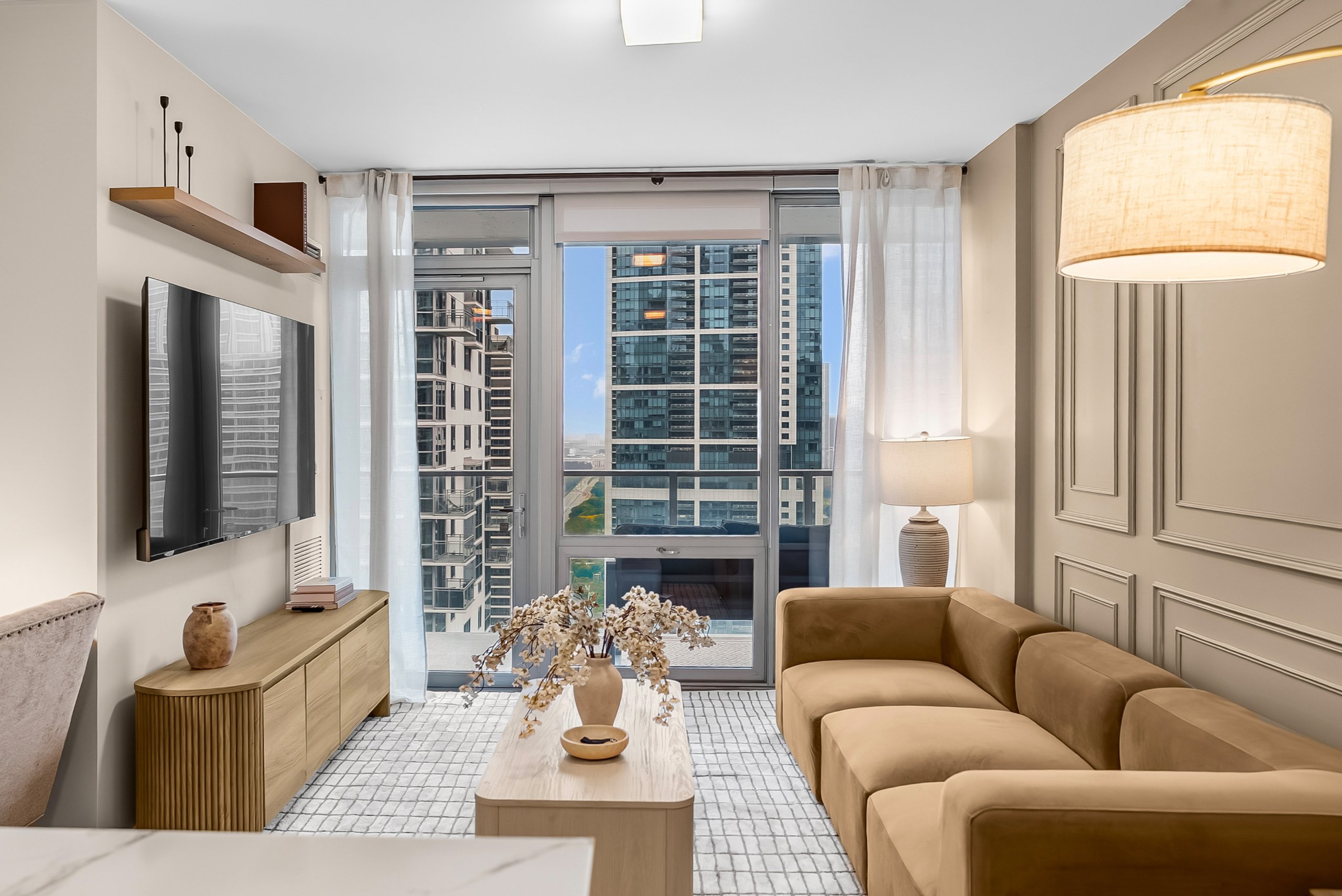
A furnished one-bedroom taken by the month can fold those items into one rate. In the example published by World Class®, the same thirty nights come to $5,000, with laundry, Wi-Fi and parking included and no lodging tax on stays of thirty nights or more. These are illustrative figures, not quoted rates, and costs vary by market, date, property and length of stay. Your own comparison should use real quotes. The point is the method: add every line, not just the room.
What Chicago Adds to the Equation
Chicago rewards a longer stay in ways a hotel room cannot. The city behaves like somewhere you can cross in twenty minutes, thanks to a flat grid, the lakefront along the east edge and an elevated train looping the center. A kitchen and a real living room matter more here than in many cities, because winter shapes how you live. A building with a pool, a fitness floor and warm common rooms downstairs turns January from an ordeal into a season.
Space is the other advantage. A one-bedroom in Chicago is genuinely a one-bedroom, with a separate kitchen and room to host a colleague, at a monthly rate that would struggle to cover a studio in some coastal markets.
Choosing the Neighborhood
Chicago's districts feel quite different, so match the area to your week:
- Streeterville: between the lake and the Magnificent Mile, with Navy Pier, Ohio Street Beach and Northwestern's downtown campus nearby.
- The Loop: the office core inside the elevated tracks, with Millennium Park and the Art Institute along its edge.
- The South Loop: toward the Museum Campus and the start of the lakefront path.
- The West Loop: restaurant blocks and the tech and consulting offices around Fulton Market.
- River North: galleries, hotels and much of the city's dining.
World Class® currently holds Chicago residences in two lakefront towers, Coast Lakeshore in Streeterville and The Reed in the South Loop, so you can pick the side of downtown that fits your commute.
Where a Hotel Still Wins
A fair comparison admits the hotel's strengths. For a stay of a few nights, daily housekeeping, a front desk and zero setup are hard to beat. Hotels also make sense when your dates are uncertain by days rather than weeks, or when loyalty points are doing real work for you. The balance tips toward a monthly residence once you pass roughly thirty nights and start paying for the same hotel services repeatedly.
Questions to Ask Before Booking Either Option
- What is the total after tax, parking, laundry and Wi-Fi?
- Is there a lease or a security deposit, and what is the cancellation policy?
- What happens if the assignment ends early?
- Does the unit have a washer and dryer, a full kitchen and a workable desk?
- Is access secure and attended if you arrive late or work nights?
With World Class®, the minimum stay is thirty nights, there is no lease and no security deposit, and the rate includes utilities and Wi-Fi. Individuals can browse furnished apartments in Chicago to see what is available for their dates.
If You Are Housing a Team
Companies placing several people face extra logistics: one invoice, matching standards across units and the option to keep colleagues in the same building. Procurement and relocation teams can look at corporate housing in Chicago and request a quote based on headcount, dates and neighborhood. Ask for a city-specific comparison against your current hotel spend so the savings are measured in your numbers, not a template's.
A Simple Way to Decide
Write down your move-in date, your likely end date and the two or three costs you would pay in a hotel that a residence includes. If the stay runs thirty nights or more, price both options with every line added. In most cases the monthly residence delivers more space, a real kitchen and a lower total. The hotel remains the better choice for the shortest trips. Either way, decide with the full cost in front of you, and Chicago's long winters, lakefront summers and fast train grid will do the rest.